E-Bike Brakes and Tires: The Quality-Control Checklist Importers Overlook
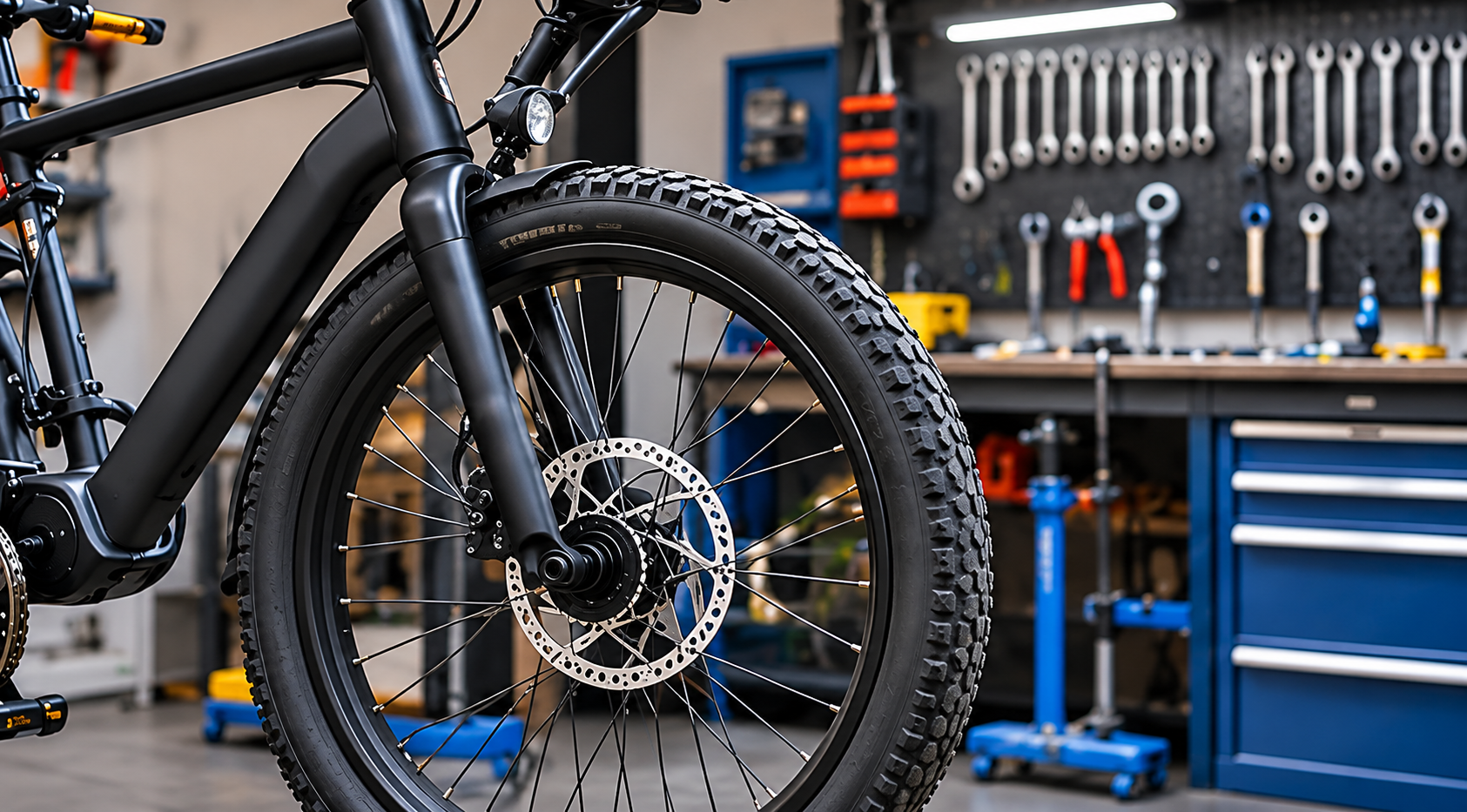
A convincing electric bicycle needs predictable stopping and dependable contact with the road. Brakes and tires are among the parts most directly affected by rider load, speed, terrain and real-world maintenance.
Inspect the complete brake system
Review lever reach, rotor mounting, pad compound, hose routing or cable paths, and thermal performance under the intended duty cycle. Ask the supplier for documented test conditions, not simply “hydraulic disc brakes” in a specification. Confirm the front and rear system function after shipment and assembly.
Match tires to the job
Check load and speed markings where applicable, tread type, puncture protection, bead seating and recommended pressure. An aggressive knobby tire may look rugged but be noisy or inefficient on pavement. Freight and local spare-parts availability should influence uncommon tire sizes.
Add incoming and end-of-line checks
Record rotor runout, rubbing, wheel alignment, spoke tension sampling, tire bead seating and torque verification. Conduct a basic functional brake inspection on every unit and define escalations for unusual noise, inconsistent lever feel or leaks. Maintain traceable quality records by batch.
Prepare dealers to maintain the product
Include pad replacement specifications, rotor wear limits, tire pressure guidance and wheel removal instructions. Customers should know when to seek professional inspection. Clear, model-specific documentation can help dealers prevent avoidable warranty disputes.
Buyer FAQ
Do larger brake rotors always mean safer bikes? No. Rotor sizing must be considered with the entire braking system, structural clearances and validated duty cycle.
Share this article
Views count once per browser per day. Likes and views are counted from the launch of this feature.
Loading comments…