Beach E-Bikes: Riding Near the Coast
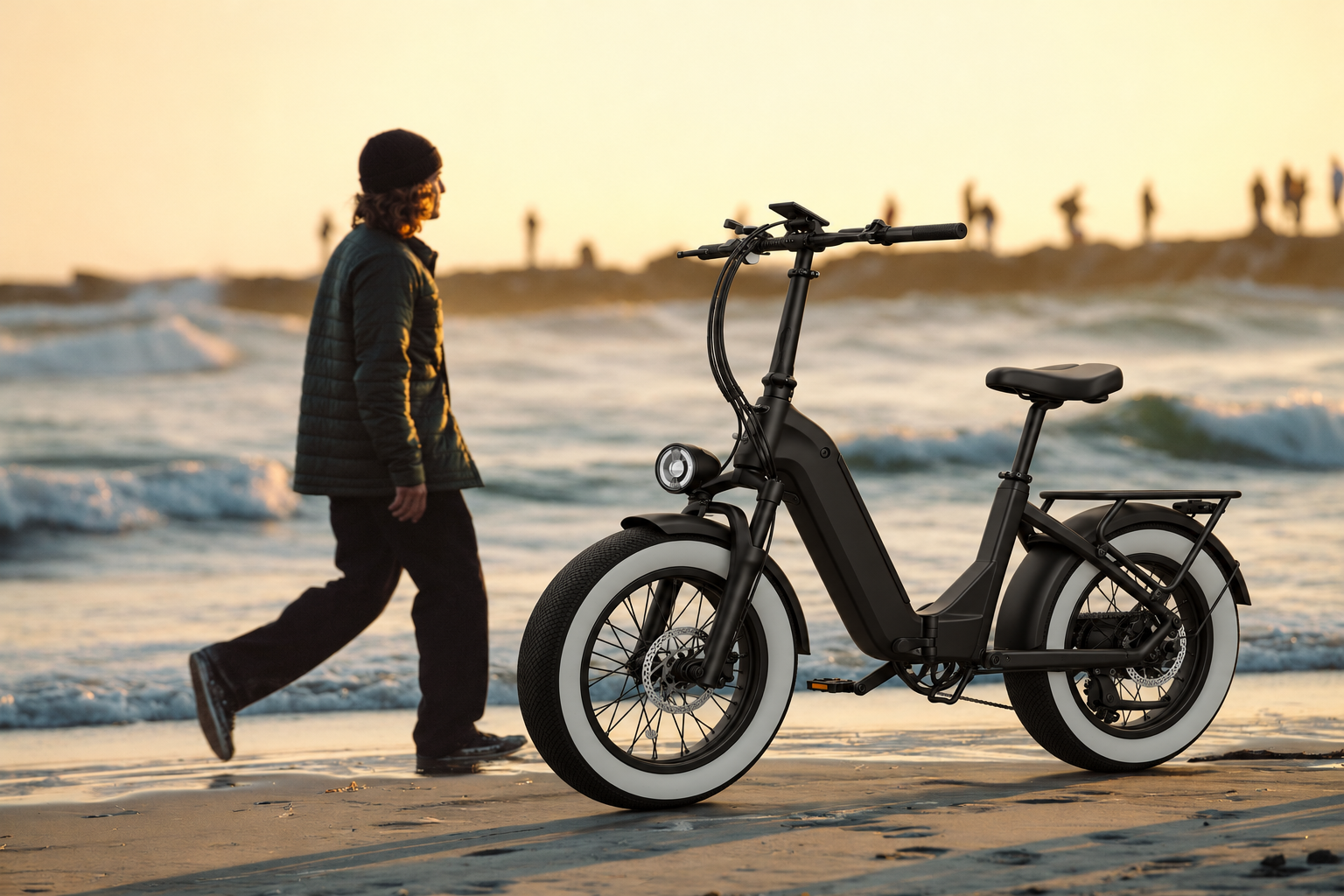
Enjoy coastal routes without damaging your bike
A coastal ride can combine boardwalks, sea views and firm sandy paths. Wide tires can help on some soft surfaces, but deep dry sand increases energy consumption and can overwhelm an unsuitable motor or drivetrain. The most enjoyable coastal route is often a legal, firm path rather than the waterline itself.
Choose a comfortable cruiser with appropriate tires and corrosion-resistant components where available. Check whether the manufacturer permits exposure to sand and salt spray. Water resistance does not mean waterproofing, and seawater is particularly damaging to electrical connectors, bearings and metal surfaces.
Ride slowly around pedestrians and avoid dunes, protected habitats and beaches where bicycles are prohibited. Stay away from breaking waves and submerged surfaces. After the ride, follow the manufacturer’s cleaning instructions, remove surface salt with a lightly damp cloth and dry the bicycle before storage. Avoid pressure washing electrical parts.
For regular coastal trips, budget for more frequent chain care and inspections of fasteners, spokes and brake components. Choose comfort and reliable service support over exaggerated claims of all-weather or waterproof performance.
Share this article
Views count once per browser per day. Likes and views are counted from the launch of this feature.
Loading comments…