Fat-Tire E-Bikes for Hunting, Camping and Rural Adventures
Adventure use is a specific purchasing mission
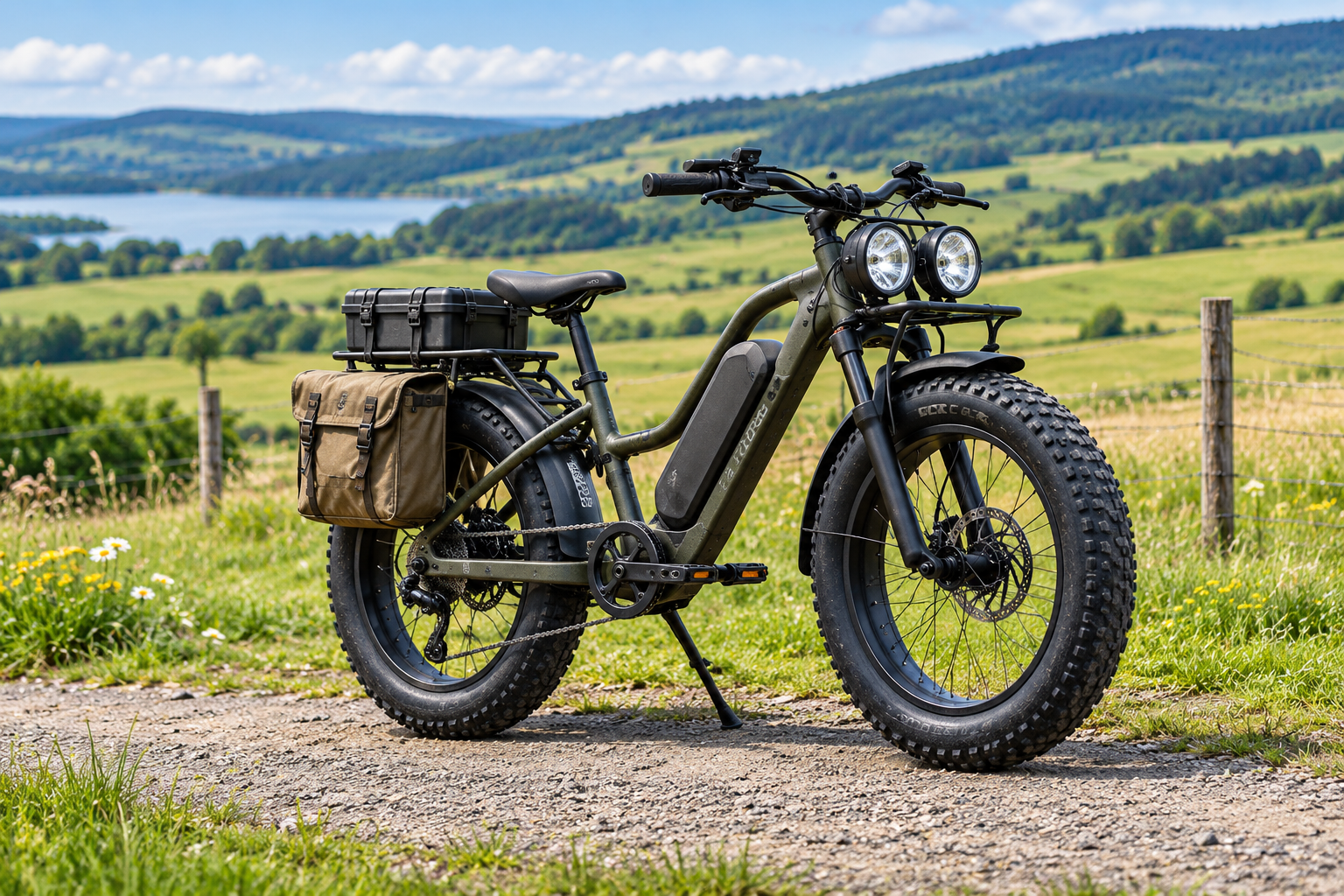
Outdoor customers often need to move gear along gravel tracks, campsites and private-land access routes. They may care more about rack geometry, low-speed control and simple field maintenance than about app connectivity. Fat tires can offer useful flotation on some loose surfaces, but they do not make an e-bike suitable for every trail or weather condition.
Practical engineering decisions
Look for load-rated rear racks, robust attachment points, corrosion-resistant hardware and straightforward battery access. A carrying setup should keep mass low and secure. Lights, mudguards and suitable brakes remain useful even when a product is marketed mainly for recreation. If a trailer is supported, the maker should specify an approved hitch point and towing limits.
Range planning without exaggerated claims
A large nominal battery helps, but sand, mud, climbing, low tire pressure and heavy loads can sharply reduce distance per charge. For example, a 52 V 25 Ah pack nominally stores 1,300 Wh, while usable energy may be lower. Range guidance should include riding mode, speed, rider weight, terrain and weather. Encourage conservative route plans with a meaningful reserve.
Where distributors find demand
Outdoor equipment retailers, rural powersports stores, hunting specialists and campgrounds may be more relevant channels than conventional city bike shops. A successful dealer kit should include accessories, replacement tires, brake consumables, usage guidance and a clear warranty policy. Importers must check where powered bicycles are permitted, because national parks, public trails and local land managers often impose restrictions.
Share this article
Views count once per browser per day. Likes and views are counted from the launch of this feature.
Loading comments…