Shared E-Bikes and Docking Stations: A 2027 Fleet Procurement Guide
The shared-bike operating model
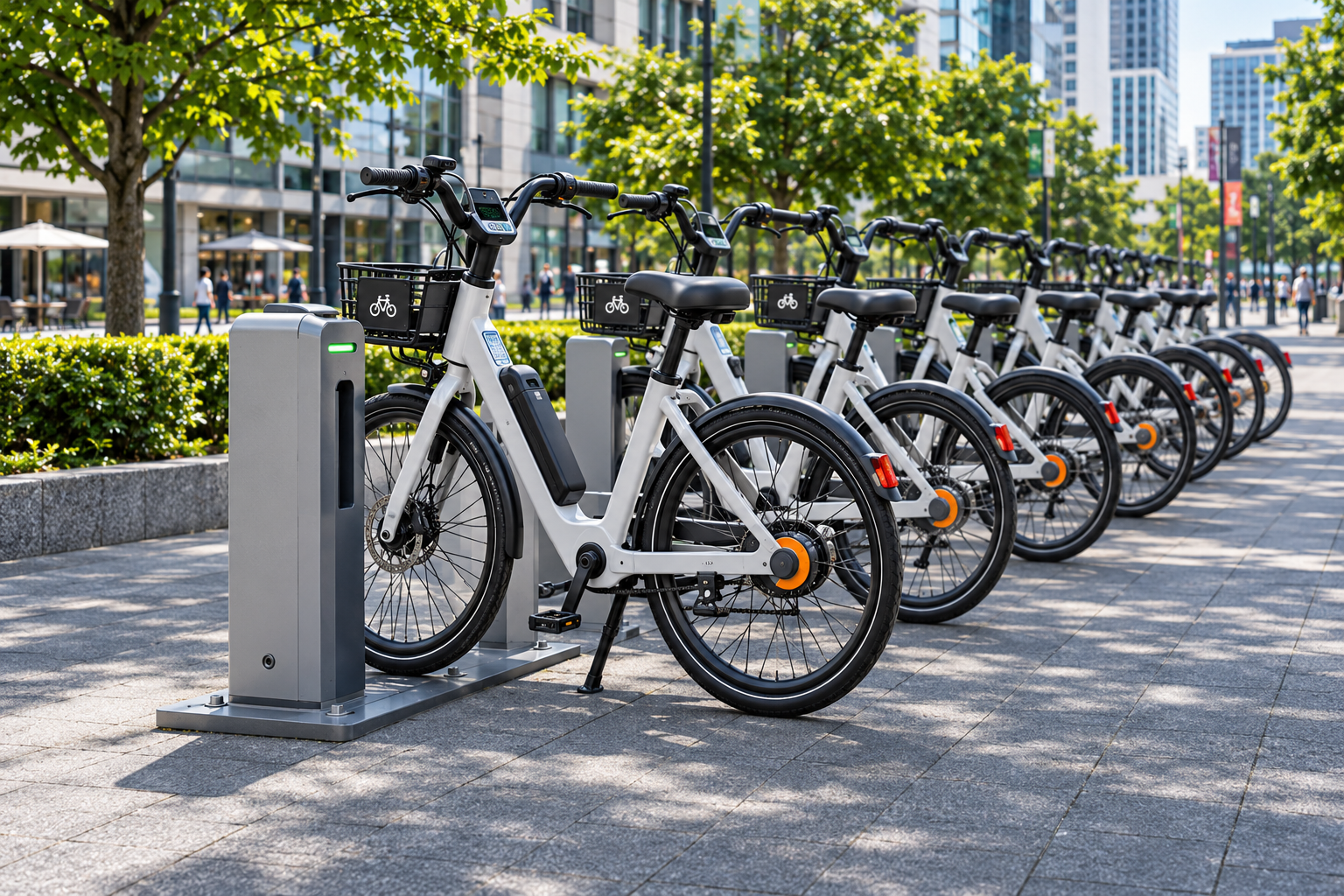
Public and private bike-share programs depend on far more than the bicycle. Operators need charging, parking control, fleet monitoring, customer support and maintenance logistics. A 15-position docking system, for example, may be attractive for a campus or residential project, but its feasibility depends on location-specific demand, power supply, access controls and the operator’s staffing plan.
Hardware requirements
For fleet bicycles, focus on durable wheels, weather-resistant connectors, vandal-resistant fasteners, automatic lighting and repairable parts. Locking interfaces must be tested with repeated docking cycles and realistic user behavior. Integrated IoT units may provide location, battery status and diagnostic alerts, but connectivity depends on available cellular networks and service agreements.
Software and operations
Before procurement, define the customer journey: registration, payments, unlocking, ride time, parking, refunds and support. Operators need access to backend data, role-based permissions and clear cybersecurity responsibilities. Fleet availability also depends on redistribution and planned maintenance, not simply how many bikes are purchased.
A pilot before city-scale investment
Deploy a small site with measurable KPIs: trips per bicycle per day, successful unlocks, charger uptime, maintenance hours, energy consumption and theft or damage rates. Review data ownership, API access, cellular subscriptions and long-term replacement-parts commitments in the contract. A complete systems quotation should separate bicycles, docks, civil works, software, installation and recurring service costs.
Share this article
Views count once per browser per day. Likes and views are counted from the launch of this feature.
Loading comments…