Electric Bike Quality Control and Container Loading: A B2B Export Checklist
Define the pre-shipment standard
Quality control begins before production with an approved sample, bill of materials, product drawings and acceptance criteria.
Inspectors need to know the exact sold configuration, not just the model nickname.
Incoming checks should cover frames, weld finish, wheel components, batteries, chargers, brakes and electronic controls.
Random finished-goods sampling is useful, but critical safety functions should also be addressed through appropriate in-process and end-of-line controls.
What to inspect on a finished bicycle
Check wheel trueness, spoke tension where applicable, headset play, brake engagement, gear indexing, tyre clearance, fastener torques and rider-contact components.
Confirm that the motor stops as specified when braking and that the display and lights function correctly.
Examine the battery retention mechanism, wiring at moving joints, connector sealing and serial labels.
Photograph defects and classify them by severity rather than treating cosmetic blemishes and safety faults as equivalent.
Packaging for long-distance transport
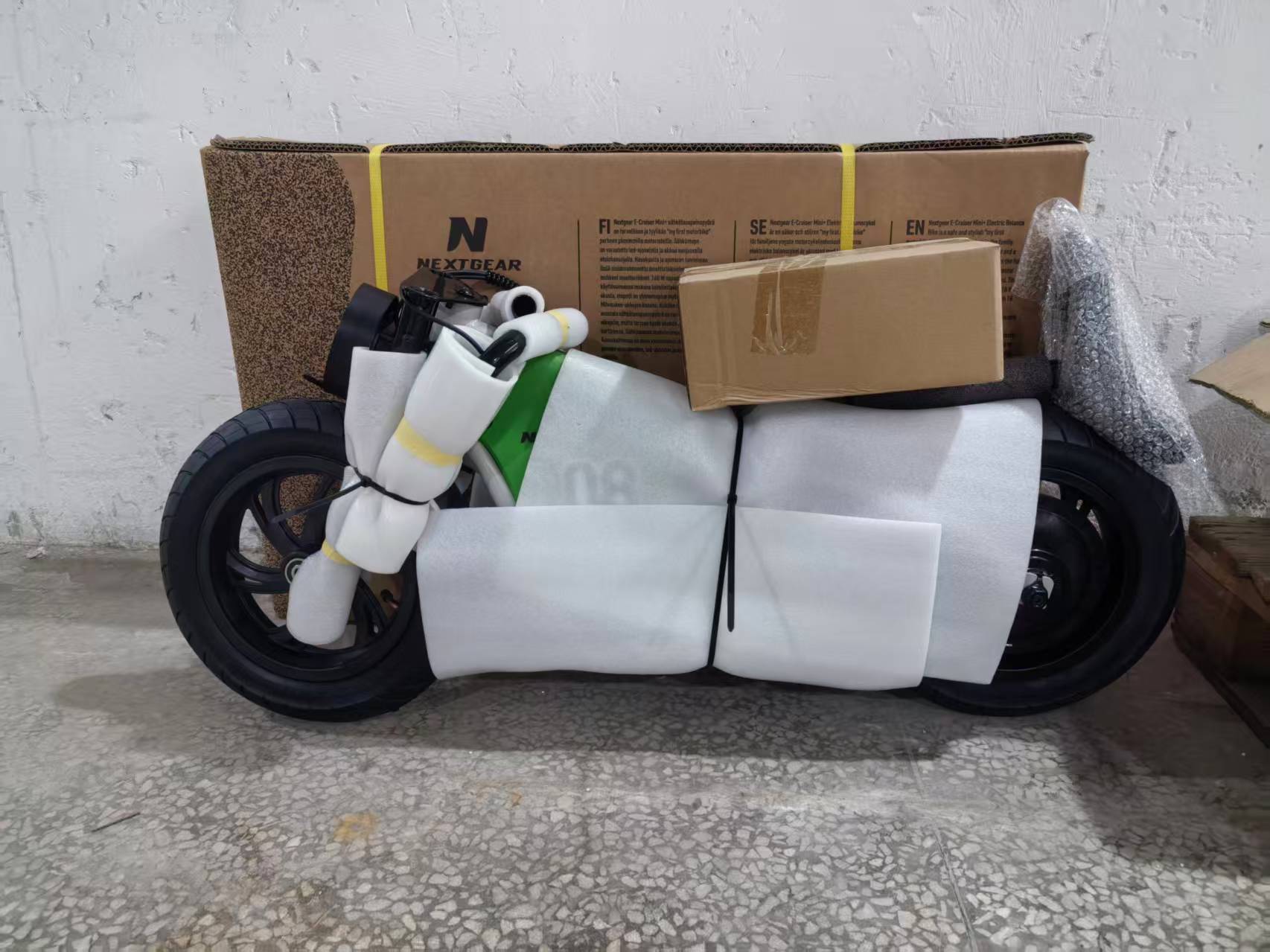
Heavy e-bikes need structural carton protection around the fork, frame, rear derailleur, display and battery location.
Handlebar and front-wheel removal may reduce carton size but increase dealer assembly labour and the risk of transit damage.
Use carton-drop and compression validation appropriate to the packing design.
Make assembly instructions, torque requirements and a small-parts inventory available to the importing distributor.
Record each carton dimension and gross weight using real packed samples.
Container planning is more than a theoretical count
A 40HQ loading estimate based only on carton volumes can be misleading.
Usable capacity depends on orientation, stacking limits, weight distribution, pallet requirements, bracing and the actual container interior.
Create a loading plan with counted positions and photographic evidence from a trial load.
Check lithium battery shipping classification, carrier rules and necessary transport documentation well ahead of booking.
Never assume a generic e-bike shipping method automatically covers every battery configuration.
Close the loop after delivery
Collect arrival photos, damage rates, assembly feedback and the first warranty cases.
Tie each observation to the product revision, batch and shipping method.
Update protective inserts or assembly instructions when evidence indicates a recurring problem.
A data-driven export process turns inspection from a cost centre into a practical way to secure repeat orders and protect the reputation of the importer and manufacturer.
Share this article
Views count once per browser per day. Likes and views are counted from the launch of this feature.
Loading comments…