Long-Range Electric Bikes: How to Evaluate Battery Capacity and Honest Mileage Claims
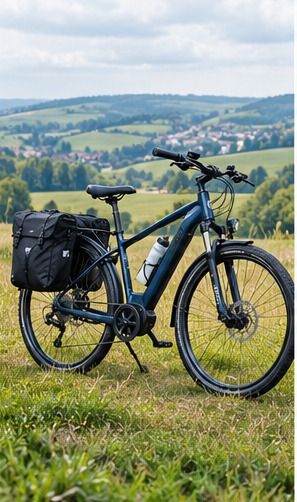
Range sells electric bikes, but range claims without a test protocol are not comparable. Two bikes advertising the same distance may have different batteries, assistance levels, rider requirements and test conditions. Importers who publish transparent numbers can build more durable trust than brands competing on an undefined maximum.
Start with energy rather than an advertised distance
Battery capacity is normally described in watt-hours (Wh), approximately nominal voltage multiplied by amp-hours. For example, 48 V × 20 Ah is about 960 Wh. This tells a buyer stored nominal energy; it does not directly predict distance, because consumption depends on the route and system efficiency.
Understand energy consumption
An illustrative bicycle using 15 Wh per kilometer could theoretically cover about 64 km from a 960 Wh nominal pack before accounting for reserve and losses. At 25 Wh per kilometer, the same simple arithmetic gives roughly 38 km. These are calculations, not promises of real-world range.
Design a repeatable range test
Record rider and cargo mass, average speed, temperature, wind, terrain, tire pressure, pedal-assist setting, battery age and starting/ending charge. Run repeated tests, document variation and keep separate results for throttle-only riding where legally relevant.
Explain battery aging and cold conditions
Capacity and power availability can decrease over time and in cold conditions. Provide realistic maintenance guidance, approved charger instructions and storage recommendations. A replacement battery policy can be a major part of a premium touring proposition.
Share this article
Views count once per browser per day. Likes and views are counted from the launch of this feature.
Loading comments…